
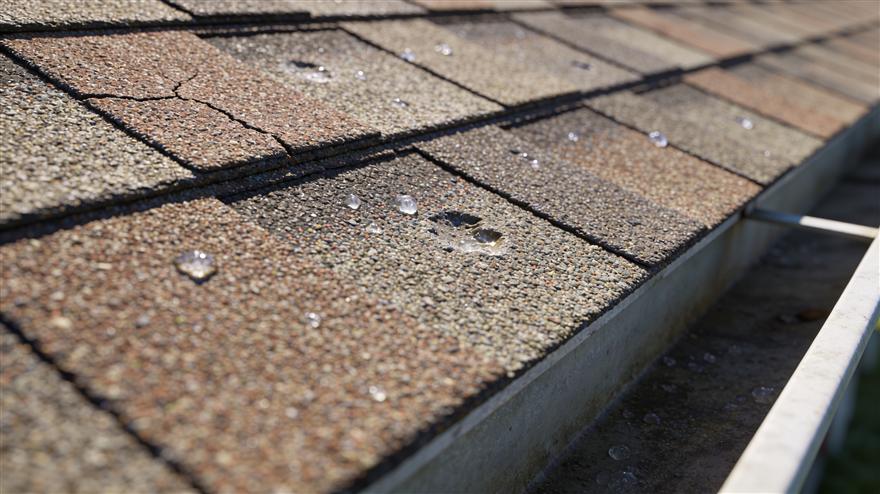
A homeowner with a leak does not call one roofer. They search, tap the first few numbers, fill in a couple of web forms, and book with whoever responds first with a real time on the calendar. In roofing, the fastest credible response often wins the inspection before price or reputation ever come up.
That is what speed to lead means: the time between a homeowner reaching out and your company responding in a useful way. This guide explains why roofing lead response time matters so much, where the delays actually come from, and how to get your response under five minutes on every channel, including the afternoon after a hailstorm.
Why Speed to Lead Matters in Roofing
- Homeowners shop in parallel. They contact several roofers at once, and the first one to book a time often stops the search.
- Urgency fades. A homeowner looking at a water stain right now is motivated. The same homeowner tomorrow may have a bucket under the drip and a quote from someone else.
- Storms compress the market. After hail, every roofer in town is calling the same neighborhoods. Response time becomes the main difference between companies.
- Leads cost money. Whether you paid for ads, bought leads, or spent years earning referrals, a slow response wastes what you already spent.
Where the Delays Actually Come From
| Channel | Typical delay | Root cause |
|---|---|---|
| Phone calls | Missed entirely | Everyone is on a roof or already on another call |
| After-hours calls | Until the next morning | Office is closed; voicemail is not checked |
| Web forms | Hours | Form goes to a shared inbox nobody owns |
| Bought leads | Hours to days | Leads sit in a vendor portal instead of the CRM |
| Storm surges | Calls abandoned | One office line cannot handle dozens of calls at once |
| Text messages | Hours | Messages land on a rep's personal phone |
Notice the pattern. Speed to lead is rarely a people problem. It is a routing problem: leads arrive somewhere nobody is watching, at a time nobody is available.
How to Get Response Time Under Five Minutes
1. Answer every call, including after hours
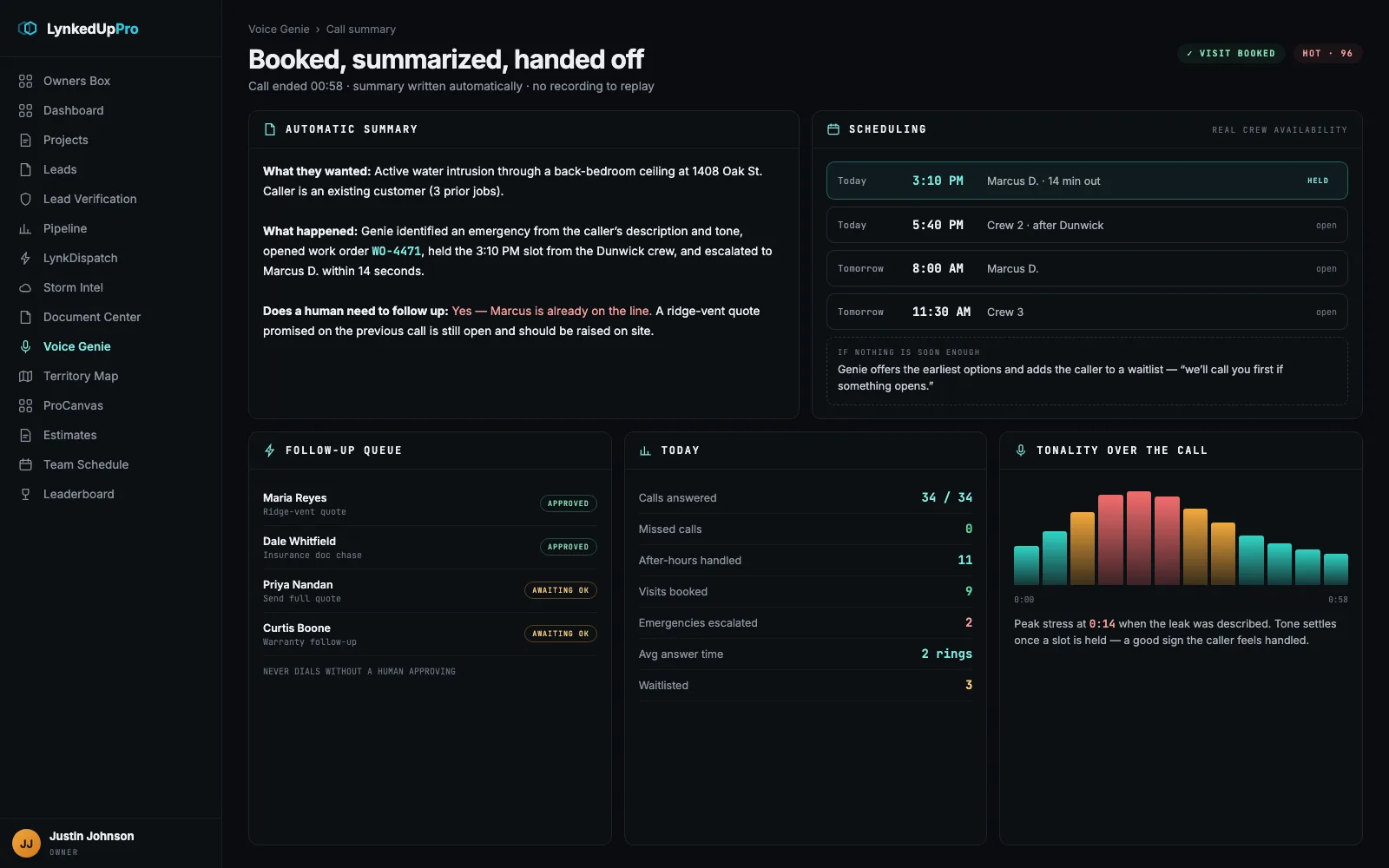
The phone is still the highest-intent channel for roofing. If a call goes to voicemail, many homeowners simply call the next roofer. An AI receptionist for roofers answers on the first ring, day or night, asks your qualifying questions, books the inspection on a real calendar, and transfers emergencies to a person. Our roofing phone script shows the questions every call should cover.
2. Text back every missed call automatically
If a call is missed for any reason, an automatic text within seconds keeps the conversation alive: "Sorry we missed you, this is [Company]. Is this about a roof repair or storm damage? Reply here or book a time at [link]." See missed-call text back for roofers for wording.
3. Send web forms straight into the CRM
Every form should create a lead with an owner and trigger an instant text and email response. No shared inboxes. The first message should offer a specific next step, not "we'll be in touch."
4. Pull bought and partner leads into one pipeline
Leads that sit in a vendor portal are leads you paid for and are not working. Route them into the same pipeline as everything else, with the same instant response.
5. Plan for storm surges before they happen
The afternoon after a hail event is when response time matters most and fails most often. Calls arrive in waves. An AI receptionist answers calls in parallel rather than in a queue, so a surge does not become a pile of abandoned calls.
6. Give every lead an owner and a clock
Each new lead should be assigned to a rep by territory, with an alert if it has not been contacted within your target time. Missed-call and unread-message alerts stop anything sitting overnight.
7. Measure response time by rep and channel
Report speed to lead weekly, by rep and by lead source. What gets measured gets fixed, and the reports usually show exactly which channel is leaking.
One Web Form, Minute by Minute
Here is the difference routing makes on a single lead. The homeowner, the times and the street are an example.
| Time | Without routing | With one pipeline and instant response |
|---|---|---|
| 6:52 p.m. | Web form lands in a shared inbox | Form creates a lead, assigned to the rep who covers that zip code |
| 6:52 p.m. | Nothing | Homeowner gets a text: confirmation, one question ("Is water coming in?") and two inspection times |
| 6:58 p.m. | Homeowner fills out two more roofers' forms | Homeowner replies "No leak, hail last week. Tomorrow 4 works." The inspection is booked on the rep's calendar |
| 7:05 p.m. | Homeowner calls the next roofer; voicemail | Rep sees the booking and the note on their phone |
| Next morning, 9:30 a.m. | Office opens the inbox and calls; homeowner says they already booked someone | Reminder text goes out; the lead's first-response time is recorded in the CRM |
The rep in the right-hand column did not work any harder. The difference is that the lead landed somewhere that responded on its own and handed a booked time to a person.
What a Fast Response Looks Like
Speed alone is not enough. A response within one minute that says "someone will call you back" is barely better than silence. A good first response does three things:
- Confirms you are a real, local roofing company.
- Asks one or two qualifying questions, such as whether water is coming in.
- Offers a specific inspection time.
Putting It Together
The simplest way to fix speed to lead is to make every channel land in one place that responds automatically. In LynkedUp Pro, Voice Genie answers calls and books inspections, every call becomes a lead with a transcript and a summary, follow-up sequences start on their own, and the roofing CRM reports speed to lead and close rate by rep. Web, canvassing, referral, and phone leads share one pipeline, so nothing waits in an inbox.
Frequently Asked Questions
What is speed to lead in roofing?
It is the time between a homeowner contacting your company, by phone, form, or text, and your first useful response, ideally one that books an inspection.
How fast should roofers respond to leads?
Aim for under five minutes on every channel. Homeowners often contact several roofers at once, and the first credible response with a booked time often wins the inspection.
How can roofers respond to leads after hours?
Use an AI receptionist or answering service for calls, automatic text-back for missed calls, and instant automated replies to web forms that offer a booking link.
Does an AI receptionist improve speed to lead?
Yes. It answers every call on the first ring, including after hours and during storm surges, qualifies the caller, and books the inspection on the call.
How do I measure roofing lead response time?
Track the time from lead creation to first contact in your CRM, and report it weekly by rep and lead source so you can see which channels are slow.